 Commercial Waste Southfields: Recycling and Sustainability Commitment
At Commercial Waste Southfields we set out to be the local leader in an eco-friendly waste disposal area and a truly sustainable rubbish area. Our approach blends practical collections with community-focused reuse initiatives, ensuring businesses in Southfields and surrounding neighbourhoods reduce waste, increase recycling and cut carbon. We recognise the boroughs' approach to waste separation—encouraging separate streams for paper, card, plastics, glass and food waste—and we design our services to complement local kerbside and commercial schemes.
 Our strategy for Southfields commercial recycling focuses on measurable outcomes. We have a clear recycling percentage target: to achieve a 65% commercial recycling rate by 2030 across the Southfields business district. This target aligns with broader regional ambitions for circular resource use and is supported by route optimisation, dedicated recycling containers and education for sites that generate mixed waste.
How the sustainable rubbish area works
We operate a network of small-scale transfer points and coordinate with local transfer stations and material recovery facilities across south London. These hubs allow us to consolidate collections, reduce vehicle miles and ensure that separated streams reach the correct processors quickly. By integrating with nearby MRFs and transfer stations, the service keeps recyclable loads clean and maximises diversion from landfill.
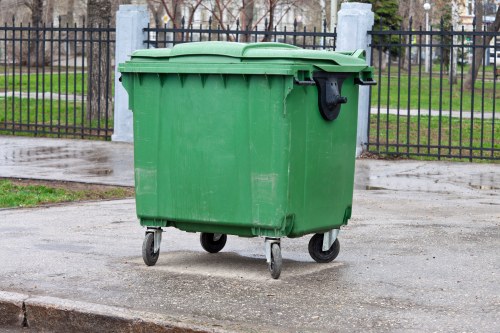
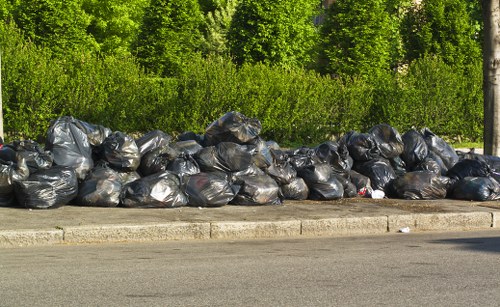 In practice, our commercial waste in Southfields service provides tailored bins and cubicles for businesses: dry recycling bays, food-waste caddies, glass crates and secure confidential-shredding skips. We support the boroughs' separation rules by offering on-site audits and staff briefings, helping teams follow the same standards used in household collections while meeting the specific needs of retail, hospitality and light industrial customers.
Beyond collection, our sustainable rubbish area promotes reuse. We maintain partnerships with local charities and social enterprises to redistribute usable office furniture, surplus food and textiles. Donation pathways are a core part of our circular model: items that are fit for reuse are diverted to community groups rather than processed as waste.
Partnerships and community reuse
Our charity partnerships are practical and long-term. We work with a range of organisations—food redistribution networks, furniture reuse charities and social enterprises—that specialise in giving items a second life. These collaborations reduce waste volumes, support vulnerable residents and keep valuable materials in use. Key activities include:
- Food redistribution from participating cafes and caterers to approved community groups;
- Office furniture reuse schemes that refurbish desks and chairs for local charities;
- Textile and clothing collections redirected to social enterprises that train and employ local people.
These initiatives complement the boroughs' collection systems and help create an authentic sustainable rubbish area for businesses of every size.
Low-carbon vans and fleet decarbonisation
 To support our low-carbon goals we are rolling out a fleet of low-emission, low-carbon vans and small electric vehicles for inner-urban collections. Route planning software, consolidated drop-offs at transfer stations and regular fleet maintenance reduce fuel burn and improve air quality in Southfields. Our aim is to cut collection-related emissions by at least 40% per tonne of waste within five years.
 The combination of electric and low-emission vehicles with smarter consolidation means fewer journeys through narrow high-street roads, less congestion and a quieter, cleaner environment for customers and residents alike. We prioritise using the most sustainable vehicle available for each task, from cargo e-vans for food collection to low-NOx vehicles for heavier loads.
Our commitment to the Southfields commercial recycling landscape is practical: we provide clear waste segregation, a predictable uplifts timetable and transparent reporting so businesses can track progress against the 65% recycling target. We offer educational support materials and onsite signage that mimic borough standards, making it easier for staff to separate waste correctly.
Performance, reporting and continuous improvement
We publish regular summaries of diversion rates and progress towards our recycling percentage target and work with clients to set bespoke goals for their premises. Using data from collections, transfer station receipts and MRF outputs, we monitor which streams deliver the best environmental returns and where behavioural change can make the most impact.
Our approach emphasises transparency: clear metrics, routine audits and collaborative problem solving with borough waste teams and recycling partners. We also invest in innovations that increase capture rates for materials such as glass and mixed plastics, while reducing contamination in dry recycling bins.
By creating a coherent, community-minded and low-carbon model for commercial waste Southfields businesses can rely on, we help turn the neighbourhood into a demonstrable sustainable rubbish area and an example of modern, responsible commercial waste management.
