Commercial Waste Southfields
Commercial waste in Southfields needs a practical, orderly service that can handle everyday business refuse without disrupting the working day. This page sets out the main waste removal options available for offices, shops, trades and shared premises, with an emphasis on clear collections, responsible sorting and straightforward quotations. The service is designed to support routine uplift of mixed commercial waste, recyclable materials and other non-hazardous items that build up in workplaces.
If your business needs waste taken away after a refit, a tidy-out, a stock change or a regular clear-down, the work can usually be planned around access, timing and the type of material involved. Our approach focuses on collecting what is ready to go, separating items where possible and making it easier to keep work areas usable. Enquire for a quote when you know roughly what needs removing, or keep reading to see how the service is organised.
For a fuller breakdown of costs and job factors, see pricing and quotes. It is often useful to compare the likely volume, the ease of access and the kinds of waste included before asking for a figure, because those details affect the plan as well as the collection method. If you only need a simple, direct response, you can still make an initial enquiry in plain language and ask for the next available option that fits the load.
Business waste removal for day-to-day rubbish
Business waste removal is the core service for many customers who need a dependable way to clear non-household refuse from an office, unit or shared commercial space. It can include paper-heavy waste, packaging, broken storage items, obsolete display materials and general rubbish gathered during normal trading. The key is to keep the process manageable: identify what is being removed, separate anything that needs special handling and avoid mixing in items that should go through a different route.
Our business waste service is suited to premises that produce irregular loads rather than a simple bin collection pattern. Some customers need one-off removal after a declutter or move; others need a more regular arrangement for overflow waste, back-room accumulation or post-project debris. If you are comparing options, think about whether the waste is mostly loose, bagged, boxed or bulky, because that affects loading time and the practical steps needed on site.
When you are ready, ask for a quotation based on the amount of waste, the access involved and any items that need separate treatment. A short description is often enough to begin, but a clearer list always helps. If there are larger pieces mixed with ordinary rubbish, mention those first so the collection can be planned properly and nothing important is overlooked.
Office clearances and workplace clean-outs
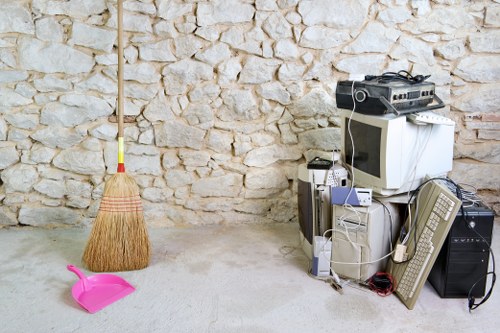
Office waste often builds up in ways that are less obvious than household rubbish: old files, worn chairs, redundant desks, broken monitors, empty storage boxes and redundant fixtures can sit in corners for months. An office clearance gives you a more structured way to remove these items together, especially when you need space for refurbishment, relocation or a change in layout. The aim is not simply to haul everything away, but to keep the process organised so that usable materials, confidential materials and ordinary waste are handled appropriately.
Where possible, office clearances can be planned around furniture, shelving, archive boxes and mixed waste in the same visit. This helps reduce disruption and makes it easier to clear rooms in the right sequence. If your premises include reception areas, meeting rooms or shared desks, it can be useful to decide which spaces should be cleared first and which items should be kept aside. That simple preparation usually makes the collection smoother and more efficient.
For a related service on fitted and loose furniture, see furniture clearance. It can be helpful when the main challenge is bulky office furniture rather than light waste alone, especially if the layout includes cabinets, shelving or other items that need separate loading. In some cases the furniture route and the general waste route work together, so the collection can be matched to the actual contents of the room.
Furniture disposal for commercial premises
Furniture disposal is often the right option when desks, chairs, tables, storage units or reception pieces have reached the end of their useful life. Commercial premises regularly replace furniture as layouts change, and those items need a proper removal plan rather than becoming back-office clutter. The service is helpful for businesses that are renewing interiors, reducing surplus stock or clearing items that are too large for ordinary waste streams.
Good furniture disposal starts with identifying what is present and what condition the items are in. Some pieces may be ready for reuse elsewhere, while others are only suitable for dismantling and removal. If furniture is mixed with cardboard, packaging or minor office waste, the material can usually be grouped so the load is handled in one go. The more clearly the items are described, the easier it is to plan the labour and the vehicle space needed.
If you need a quote for larger items, mention dimensions, quantity and access so the response reflects the real work involved. For customers who also have damaged seating to remove, the dedicated page for mattress and sofa disposal explains a more specific bulky-item service that can be useful alongside general business furniture removal. A practical quote depends on the actual mix, not just the name of the furniture.
Bulky items and specialist disposal options
Not every commercial load is made up of small bags or light office rubbish. Some sites need bulky-item disposal for awkward pieces such as cabinets, appliances, display units or worn fittings that do not fit standard bins. In these situations, the collection plan needs to reflect size, weight and the way the items are positioned. That is especially important when access is through narrow corridors, upper floors or shared entrances.
Where bulky items are part of a wider clean-out, the waste can often be grouped with other commercial refuse so that the job is completed in a single visit. This approach is useful for retail units, hospitality spaces, storage rooms and workshops that end up with a mixture of materials. If there are appliances in the load, they should be identified early so that the right disposal route can be used. Commercial customers often find that a little sorting beforehand saves time on the day.
For appliances and similar items, you may wish to review fridge and appliance removal. It gives a clear route for equipment that is no longer needed and may require more specific handling than general waste. If you are not sure whether an item belongs in that category, describe it in the enquiry and let the collection be matched to the right disposal method.
Bulky waste and mixed site clearances
Some customers need more than one type of removal at once: broken office furniture, bagged rubbish, old fixtures and miscellaneous items gathered after a move or refit. Mixed site clearances suit that kind of load because they combine the useful parts of a waste removal visit without forcing you to split everything into separate jobs. The result is a neater working area and a more direct way to deal with what has accumulated.
These clearances work best when the contents are described in groups rather than as one long list of fragments. For example, a customer might have boxed paper waste, a small number of desks, several chairs and some packaging from a recent delivery. That is the sort of information that helps shape a sensible collection plan. Clearer information usually means a cleaner estimate, because the size of the load and the loading effort are easier to understand.
For larger mixed clear-outs, especially where premises contain old stock, loose waste and disused fittings, the broader waste removal page is a helpful place to compare the general service scope. It can support projects where the waste is too varied for a narrow single-item route but not so specialised that it needs a separate trade-specific arrangement. A short, direct enquiry can then turn the scope into a practical quote.
H3: Office, trade and retail loads
Office, trade and retail waste often share the same challenge: useful space gets taken over by items that are no longer needed, but the load itself is still mixed enough to need a considered removal. A store room may hold packaging and dated display materials, while a workshop may have offcuts, containers and old equipment. Our commercial waste service is set up to deal with these practical combinations without making the process more complicated than it needs to be.
For trade customers, it can help to separate ordinary waste from anything sharp, heavy or potentially contaminated before the collection is arranged. That does not mean every item must be sorted into perfect categories, but it does mean the collection can be matched more accurately to the contents. If you are managing a retail close-down, shop refit or office changeover, the best results usually come from a quick review of what should go, what should stay and what needs a different route.
Some projects also need guidance on permitted materials. If you are unsure about a specific item, the page on what can go in a skip can help frame the kind of materials that need a different disposal approach. That is useful background even when you are using a collection service rather than a skip, because it encourages clearer decisions about what belongs in the load and what should be set aside.
About Southfields
Southfields is a district in the London Borough of Wandsworth, set in south-west London between Wimbledon Park to the west and the wider Putney and Earlsfield areas to the east and north-east. It is closely associated with the London Underground’s District line, with Southfields station serving the area and giving it a direct link into central London and beyond. The district is also known for its residential streets, interwar housing and its proximity to Wimbledon Park and the wider Wimbledon area, which together give it a blend of neighbourhood calm and easy access to major sporting and transport landmarks. Southfields has long been shaped by railway growth and suburban development, with much of its present character reflecting late Victorian and early twentieth-century expansion rather than an older village core. The local street pattern includes smaller shopping parades, purpose-built flats and terraced homes, while the surrounding roads connect to busier routes leading towards the River Thames and central Wandsworth. Nearby green spaces and the open ground of Wimbledon Park add a noticeable sense of openness in a district otherwise defined by dense urban housing. The area is also culturally tied to Wimbledon Championships traffic and seasonal activity, although Southfields itself remains a distinct place with its own everyday life, services and civic identity. Its mix of housing types, local shopping streets and transport links makes it a recognisable part of inner south-west London rather than just an extension of the nearby stadium area.
Hazardous and sensitive materials

Some commercial premises produce items that should not be treated as ordinary waste. Paint tins, chemicals, certain cleaning products and other sensitive materials may need a more careful disposal route. Hazardous waste disposal is not the same as a standard clearance, and it should only be arranged with a clear description of what is present. If a business is uncertain about the contents of a store cupboard, workshop shelf or maintenance area, that uncertainty should be resolved before the load is scheduled.
The most useful step is usually to separate known ordinary waste from items that need special attention. Once the load is divided in that way, the rest of the collection can be planned more safely. A customer does not need to become an expert in waste classification, but it does help to identify what the containers are, whether they are sealed, and whether any item has a label that suggests it should be handled differently. That information supports safer planning and a more accurate quotation.
To compare the specialist route with general commercial clearances, you can also look at hazardous waste disposal. It is the right place to start when you have items that need more than ordinary rubbish handling. If you are unsure, describe the materials plainly rather than guessing; the aim is to match the collection to the waste correctly from the outset.
H3: Preparing a sensible quotation
A good quotation usually depends on three practical details: what needs removing, how much of it there is and how easy it is to access. Photos can be helpful, but a written description is often enough if it includes the main item types, the approximate number of bags or pieces, and whether the waste is on a ground floor, in a basement or upstairs. That makes it easier to estimate the work without turning the enquiry into a long back-and-forth.
If a collection includes fragile items, confidential paperwork, fixed fittings or anything awkward to carry, it is sensible to mention that as well. The purpose is not to overcomplicate the request; it is to make sure the quote reflects the real work rather than a simplified guess. For many businesses, the best outcome comes from giving a concise but honest summary, then allowing the collection plan to be adjusted to suit the site and the load.
For the final step, request a quotation after you have checked the main categories of waste and the access points that matter. If the job also involves business archive material, the service on confidential shredding is worth considering alongside disposal, especially where paperwork must be treated separately from general rubbish. A careful, specific enquiry is the quickest way to get a useful response.
Recycling, sorting and sustainable handling
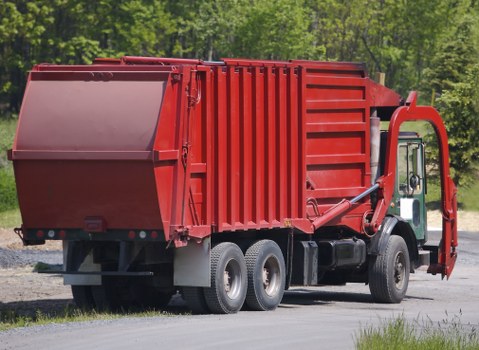
Commercial waste handling is most effective when recyclable material is separated from general rubbish wherever practical. Cardboard, paper, office plastics, reusable metals and similar materials can often be identified before the collection, which helps the process stay orderly and makes the load easier to assess. This does not mean every business must pre-sort everything perfectly, but a modest amount of sorting can make a meaningful difference to the way the waste is processed.
Recycling also matters when a load includes a mix of furniture, packaging and loose refuse. Rather than thinking of the job as one single bin, it is often better to think about the stream each item belongs in. That can support cleaner disposal decisions and reduce the chance of mixed materials being handled unnecessarily as ordinary rubbish. For customers who want a broader overview of this side of the service, the page on recycling and sustainability gives useful context.
When you are ready to move ahead, keep the request clear and direct: state the site type, the main waste categories and any special items that need attention. Then ask for the quote that fits the work, rather than trying to force the job into a generic template. Commercial waste in Southfields is best handled with that same practical approach throughout: straightforward description, suitable collection route and a result that leaves the premises easier to use.